When Claire noticed her perennial bed near the driveway producing fewer blooms and patchy foliage, she traced the problem to uneven watering — the plants closest to the hose were waterlogged while the far edge wilted between visits. She wanted a solution that would give each root zone steady moisture without spending hours hand-watering every week. This guide matches common flower-bed watering problems to the right irrigation setup so you can get consistent, healthier blooms with the right tools and schedule.
Problem: Irregular, Surface Wetting — Solution: Drip Lines for Root-Level Consistency
Challenge: Many gardeners wet only the soil surface with a sprinkler or watering can. Surface wetting encourages shallow roots, fungal issues, and plants that wilt during hot afternoons. A typical scenario is a flower bed with mixed perennials and annuals: the annuals are thriving because they get watered daily, while the perennials suffer from shallow root systems.
Why drip works
Drip irrigation delivers water slowly and directly to the root zone. That encourages deeper roots and reduces evaporation. For example, the University of California Cooperative Extension reports that drip systems can reduce water use by 30–70% compared with overhead irrigation in some landscape applications.
Best setup for mixed perennial beds
Use a 1/4" or 1/2" drip line with emitters spaced 6–12" for dense plantings, and 12–24" spacing for larger perennials. Place lines close to the base of plants, tucking them under 1–2" of mulch. A basic RainPoint-compatible drip kit can include a pressure regulator, inline filter, and 12–18 emitters — that’s all many homeowners need to convert a 10–30 sq ft bed. If you want a step-by-step product-focused plan for flower beds, check this helpful resource for how to set up flower bed irrigation for healthier blooms.
- Equipment: mainline tubing, drip line (emitters built-in or point emitters), filter, pressure regulator.
- Typical run: 50–100 ft of drip tubing per bed depending on layout.
- Example: 12 emitters at 0.5 GPH for a 10 ft border = 6 GPH when running; run 30 minutes twice a week for deep watering in summer.
Problem: Water Runs Off Slopes or Compacted Soil — Solution: Soaker Hoses and Pulse Watering
Challenge: On a sloped flower bed or compacted clay soil, water tends to run off before it soaks in. Homeowner Jamal had a slope where attempts to irrigate more often just increased runoff and erosion. The answer is slow application and timing adjustments.
Soaker hoses and staging
Soaker hoses release water along their length and are great for gently moistening slopes. Run the hose along contour lines and use pulse watering — short cycles with rest periods — to allow infiltration. For instance, run a soaker hose for 20 minutes, pause 40 minutes, then run another 20 minutes; repeating this pattern reduces runoff on clay soils.
When to choose soaker hose vs drip
Soaker hoses are easier to lay and ideal for informal or densely planted beds. Choose a drip system when you need per-plant control (ornamental grasses, isolated shrubs, or when beds have mixed spacing). A typical slope installation uses soaker hose with stakes and a filter; pair it with a timer for consistency. A weather-aware WiFi timer from RainPoint can handle multiple short cycles automatically, saving you trips outside and managing pulse schedules precisely.
Problem: Small, Decorative Borders or Potted Arrangements — Solution: Micro-sprays and Self-Watering Options
Challenge: Narrow borders and container groups often need gentler, more even coverage than drip emitters provide. Sarah had a narrow 6-inch-wide border behind her patio where typical emitters missed many plants.
Micro-sprays and mister heads
Micro-spray or micro-misting heads mounted on small stakes give light, even coverage across a 2–6 ft radius. They’re excellent for small annual beds and compact ornamental plantings where foliage wetting is acceptable or desired. Use them on a low-flow zone (0.5–2.0 GPM) and run for shorter durations more frequently during hot spells.
Self-watering planters for containers
For potted plants, self-watering systems or wicking containers keep moisture steady without overwatering. Many DIYers combine a small reservoir with a capillary mat or a slow-drip emitter at each pot's soil level. These setups reduce daily maintenance and prevent the extremes that kill many containers — drying out one day and soggy roots the next.
Problem: Large Beds with Mixed Species — Solution: Zoned Smart Control and Hybrid Systems
Challenge: A homeowner with multiple large flower beds that have differing needs — bulbs, perennials, annuals — often ends up overwatering some areas while under-watering others. Consider Luis, who had three beds: spring bulbs, summer perennials, and a shady fern bed. Each needed a different program.
Zoning and smart timers
Zoning lets you run different systems — drip for perennials, micro-spray for annuals, and short cycles for shady beds — on separate schedules. Smart timers or WiFi sprinkler controllers allow automated seasonal changes; the EPA estimates smart irrigation controllers can reduce outdoor water use by up to 15% or more compared to conventional timers (EPA WaterSense program).
Hybrid systems and practical setup
Mixing drip, soaker hose, and micro-sprays on separate zones gives precise control. A common setup: zone 1 (drip) for perennials, run 30 minutes twice weekly; zone 2 (micro-spray) for annuals, run 15 minutes thrice weekly; zone 3 (soaker) for shrubs, run 45 minutes once weekly. A simple table helps visualize a seasonal run plan:
ZoneSystemSummer Run TimeRecommended Frequency1Drip (emitters 0.5–1.0 GPH)30 minutes2× per week2Micro-spray (0.5–2.0 GPM)15 minutes3× per week3Soaker hose45 minutes1× per week
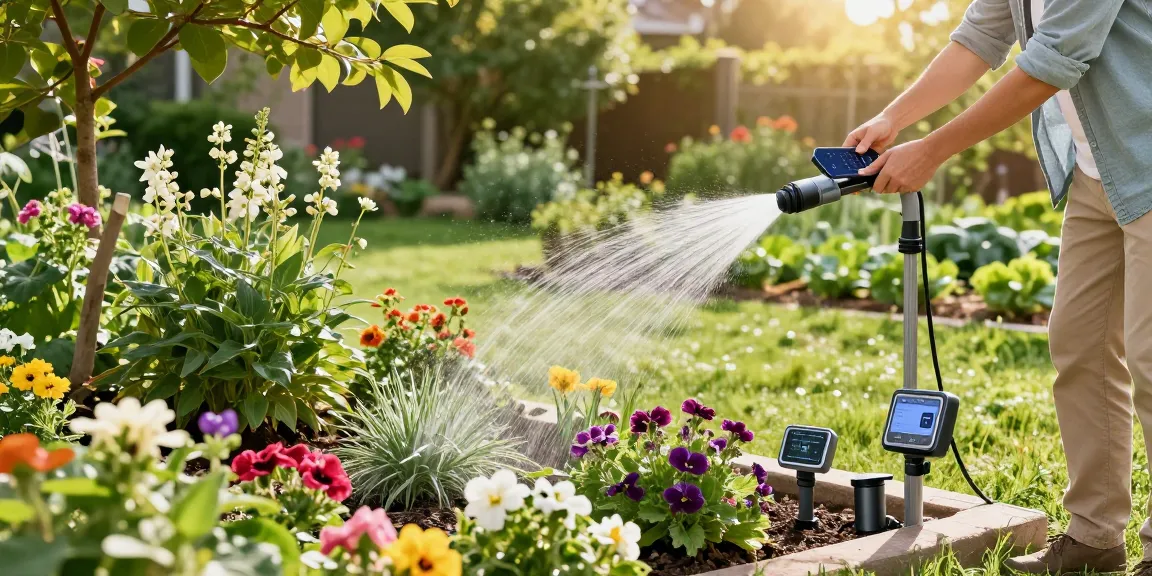
Pairing these zones with a smart controller makes seasonal adjustments easy. A WiFi-enabled RainPoint timer, for instance, can auto-adjust schedules based on local weather data and your plant types, which keeps each zone getting the right amount without manual intervention.
Maintenance, Monitoring, and Troubleshooting: Keep Systems Working for Healthier Blooms
Challenge: Even the best system needs occasional attention. Clogged emitters, broken tubing, or changes in soil composition will affect performance. For example, sandy soils need more frequent, shorter runs; clay soils need longer, staged runs.
Routine checks and winter care
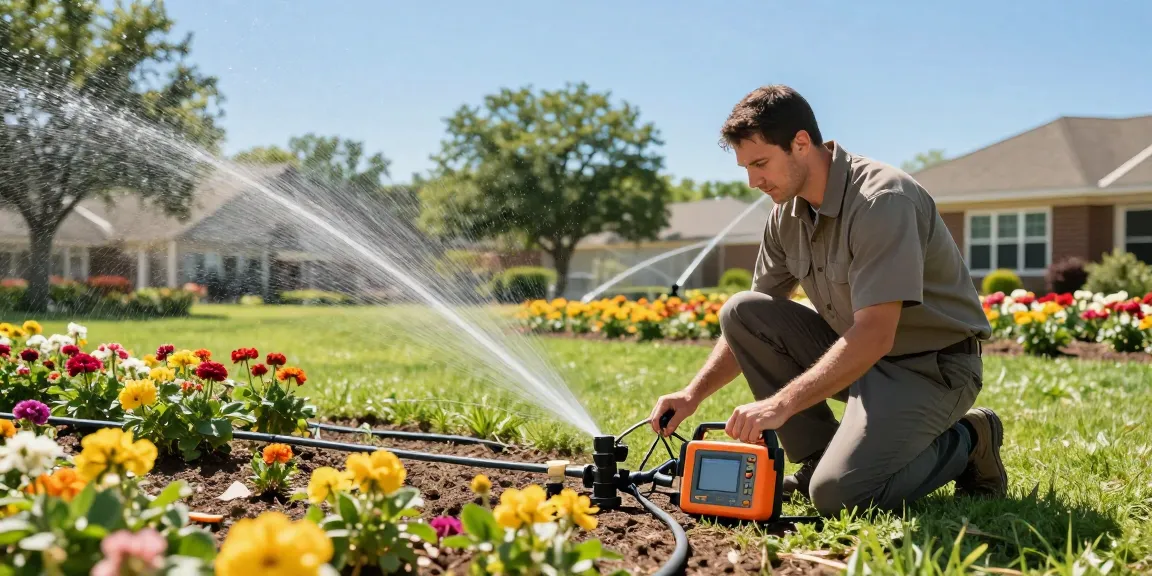
Inspect emitters monthly during the growing season. Clean filters every 2–3 months and flush lines at season start. In colder climates, drain and store exposed hoses and disconnect timers before temperatures fall below freezing. A realistic routine: 10–15 minutes of system walk-through monthly and a 30–60 minute seasonal teardown or start-up.
Simple diagnostics
If plants on one side of the bed look dry, check pressure and look for kinked tubing; if leaves are yellow and soft, reduce run times and check drainage. Keep a watering log for a month to spot trends. Small adjustments — moving an emitter 2–4 inches closer to a plant crown or swapping a 0.5 GPH emitter for a 1.0 GPH — often fix performance problems quickly.
Choosing the right irrigation approach is about matching the problem to the solution: drip for deep root health, soaker hoses for slopes, micro-sprays for narrow borders, and smart timers for complex zones. When you align the system to plant type and site conditions, you'll see fuller, more resilient blooms with less water and less work.