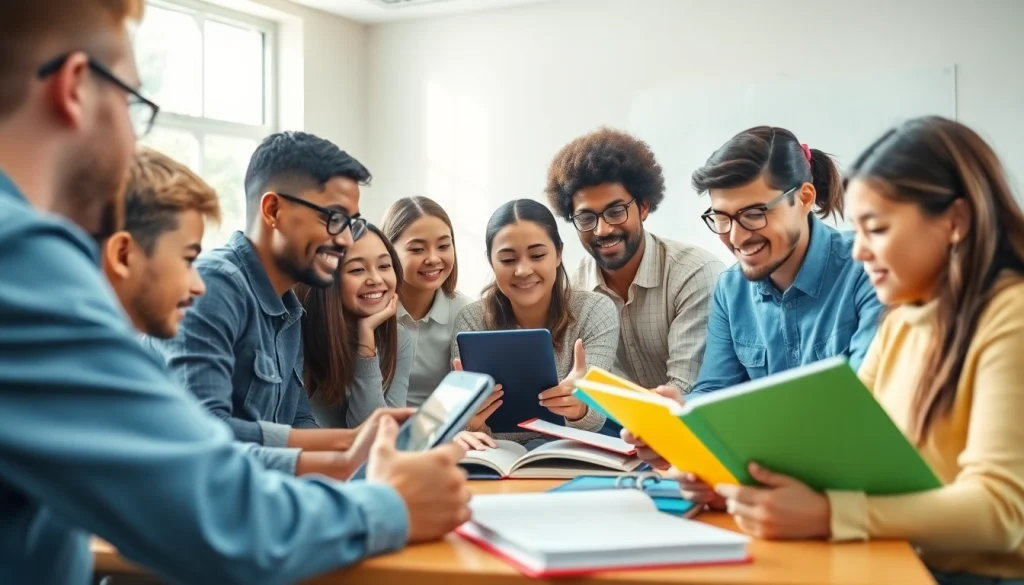
Understanding the Role of Education in Society
Education is a fundamental pillar shaping individuals and societies, enabling them to thrive in an ever-evolving world. It encompasses the transmission of knowledge, skills, and values essential for personal and communal growth. By engaging in comprehensive Education, individuals can improve their lives and impact their communities positively. This article delves into the importance of education, explores historical perspectives, and examines current trends influencing modern learning.
Defining Education and Its Importance
At its core, education is a structured process of acquiring knowledge, skills, and critical thinking abilities. It plays a crucial role not only in individual development but also in enhancing societal well-being. An educated population is typically associated with lower crime rates, improved health, and greater civic engagement. Education acts as a ladder of social mobility, providing opportunities for personal advancement and economic stability.
Education enhances critical reasoning, creativity, and social awareness among individuals, thereby fostering informed citizens who can contribute effectively to democratic processes. Furthermore, access to quality education is pivotal in reducing inequalities, paving the way for more equitable societies.
Historical Perspectives on Education
The evolution of education can be traced back to ancient civilizations where informal learning took place through storytelling, apprenticeship, and religious instruction. Formal education systems began to emerge with the establishment of schools and universities during the Middle Ages, primarily in Europe. These institutions focused on humanities, sciences, and clerical education.
In the 19th and 20th centuries, education underwent significant transformations with the introduction of compulsory education laws, which aimed to ensure that all children receive basic schooling. This period also witnessed the rise of progressive education theories, which emphasized experiential learning and the critical role of the teacher as a facilitator, rather than merely a transmitter of knowledge.
Current Trends in Education
Today, the educational landscape is characterized by rapid changes influenced by technological advancements, globalization, and evolving societal needs. Digital learning platforms and online courses have made education more accessible and flexible, enabling learners to pursue knowledge at their own pace. Moreover, there is a growing emphasis on STEM (Science, Technology, Engineering, and Mathematics) education, reflecting the demand for skills relevant in today’s job market.
Additionally, social-emotional learning (SEL) is gaining traction as educators recognize the importance of fostering emotional intelligence alongside cognitive skills. This holistic approach aims to prepare students not only for academic success but also for thriving in their personal lives and careers.
Challenges in Modern Education
Barriers to Accessing Quality Education
Despite advancements, significant barriers still hinder access to quality education for many individuals. Socioeconomic status remains a principal factor, with students from low-income families often facing numerous challenges, including inadequate school funding, limited access to resources, and unstable home environments. Additionally, geographic location can restrict educational opportunities, especially in rural areas where schools may lack basic facilities.
Language barriers and cultural differences also pose challenges for immigrant and minority students, affecting their ability to engage in the learning process fully. To address these issues, educators and policymakers must prioritize inclusive education practices, ensuring that all students receive equitable access to learning opportunities.
Addressing Educational Disparities
Addressing educational disparities requires comprehensive strategies that tackle root causes and promote equity. Initiatives such as funding reform, targeted scholarships, and after-school programs can significantly improve access to education for marginalized communities. Additionally, schools should focus on building supportive networks, where mentorship and counseling services provide assistance to those in need.
Community engagement is essential in this endeavor, fostering collaboration among educators, families, and local organizations to support students holistically. Moreover, implementing culturally responsive teaching practices can create inclusive environments that respect students’ backgrounds while enhancing educational outcomes.
Impact of Technology on Education
Technology’s pervasive role in modern education has revolutionized traditional teaching methods, presenting both opportunities and challenges. Online learning platforms enable students to access resources from anywhere, facilitating personalized learning experiences tailored to individual needs. However, the digital divide remains a concern, as not all students have equal access to the internet and devices necessary for digital learning.
Furthermore, the integration of artificial intelligence (AI) in education is reshaping the landscape by providing adaptive learning environments that analyze student performance and adjust curricula accordingly. Despite its potential, over-reliance on technology can lead to a depersonalization of learning, emphasizing the importance of maintaining human connections in the educational process.
Strategies for Effective Teaching and Learning
Engaging Students with Active Learning
Active learning strategies engage students directly in the learning process, fostering collaboration and critical thinking. Techniques such as group discussions, problem-solving activities, and project-based learning create dynamic environments that encourage student participation. Educators can employ methods like the flipped classroom model, where students review content at home and engage in interactive activities during class time, resulting in deeper comprehension.
Incorporating real-world applications into lessons can also boost engagement. For instance, using case studies or simulations allows students to explore complex issues in relevant contexts, preparing them for challenges they may face in their future careers.
Utilizing Technology to Enhance Education
To enhance the learning experience, educators must leverage technology effectively. Tools such as educational apps, interactive whiteboards, and virtual reality can create immersive learning experiences that captivate students. Furthermore, online collaboration tools enable students to work together regardless of location, promoting teamwork and communication skills.
Additionally, educators should stay informed about emerging technologies and trends to make informed decisions regarding their integration into the classroom. Professional development opportunities focused on technology use can support teachers in enhancing their instructional practices, ultimately benefiting student outcomes.
Fostering a Positive Learning Environment
A positive learning environment is essential for student success, as it facilitates safety, respect, and collaboration. Educators can establish this environment by promoting a culture of inclusivity and encouraging open communication. Creating classroom norms that prioritize mutual respect and active listening fosters positive interactions among students.
Moreover, recognizing and celebrating diverse perspectives enriches classroom discussions, allowing students to learn from one another. Teachers should also employ restorative practices that address conflicts constructively, reinforcing community and belonging within the classroom.
Measuring Educational Success
Defining Key Performance Indicators in Education
To assess educational success effectively, educators and institutions need to define key performance indicators (KPIs) that reflect desired outcomes. Typical KPIs include student attendance rates, graduation rates, standardized test scores, and post-graduation employment statistics. Additionally, incorporating qualitative measures such as student engagement and satisfaction surveys can provide a comprehensive perspective on educational effectiveness.
It is vital to establish a balance between quantitative and qualitative data to glean meaningful insights. Data analysis can drive decision-making processes, enabling educators to identify strengths and weaknesses and tailor interventions accordingly.
Assessing Student Performance Effectively
Effective assessment practices are paramount in monitoring student progress and informing instruction. Traditional grading systems often fail to capture the complexity of student learning; therefore, educators should consider adopting formative assessments that gauge understanding in real-time. Tools such as reflective journals, peer assessments, and self-assessments can empower students to take ownership of their learning while providing valuable feedback to educators.
Performance assessments, including portfolios and presentations, allow students to demonstrate their knowledge and skills in practical contexts, fostering deeper learning experiences. Ultimately, assessments should align with educational goals, providing a clear picture of student accomplishments and areas for improvement.
Continuous Improvement in Education
Continuous improvement is essential for maintaining a high standard of education. Educators and institutions must engage in ongoing professional development to stay informed about best practices and evolving pedagogical theories. Regularly reviewing curricula to ensure relevance and effectiveness is critical in adapting to changing societal needs.
Moreover, fostering a culture of innovation encourages educators to experiment with new teaching methods and technologies. Creating feedback loops where students and parents can voice their opinions about the educational experience strengthens community ties and promotes accountability. By prioritizing continuous improvement, educational institutions can better prepare students for the challenges of tomorrow.
Future Trends in Education
Innovations Shaping the Future of Learning
The future of education is characterized by innovations that leverage technology and research-backed methodologies. Online and blended learning models are likely to flourish, offering students flexible, personalized learning experiences. Additionally, competency-based education emphasizes mastery of skills over seat time, ensuring students progress at their own pace.
Furthermore, gamification—a technique that incorporates game elements into learning—has proven effective in increasing student engagement and motivation. As educators continue to explore innovative approaches, new classroom strategies will emerge to meet the diverse needs of learners.
Global Perspectives on Education Reform
Education reform is a global endeavor, with nations around the world pursuing initiatives to enhance education systems. Collaborative efforts between governments, NGOs, and communities can lead to impactful reforms that prioritize inclusivity and accessibility. For example, some countries have successfully implemented dual-language programs to support immigrant students while fostering bilingualism among all learners.
Global educational exchange programs not only promote cultural understanding but also allow educators to share best practices on a larger scale. Such collaboration can contribute to more robust, resilient education systems that are prepared to tackle future challenges.
Preparing for the Future Workforce
Preparing students for the future workforce involves equipping them with the skills necessary to navigate a competitive landscape. Emphasizing critical thinking, adaptability, and collaboration is essential, as these skills are increasingly valued by employers across industries. Integrating soft skills training into curricula ensures students are well-rounded and capable of thriving in dynamic work environments.
Furthermore, fostering partnerships with local businesses can provide students with internships and hands-on learning experiences, bridging the gap between education and real-world applications. By preparing students for future challenges, educational institutions play a key role in promoting economic growth and societal advancement.